This page has been written and reviewed by Attorney Michal Durakiewicz, founder of Durak Divorce and Family Law and a Tennessee State Bar licensed attorney since 2015. Michal represents individuals throughout Franklin, TN, in divorce matters involving parenting disputes, property division, child support, and other family law issues.
Separation rarely affects only one part of a person’s life at a time. Changes involving finances, parenting responsibilities, living arrangements, and long-term planning often begin developing together before the legal process is fully understood. A Franklin divorce lawyer frequently helps individuals manage those overlapping concerns while preparing for the legal and financial decisions ahead.
Some divorces proceed through negotiated agreements that reduce conflict and limit prolonged courtroom proceedings. Other matters involve disputes over parenting responsibilities, support obligations, property division, or decision-making authority that require formal court involvement. When disputes begin involving parenting issues, finances, or property division, filing requirements, financial disclosures, and procedural deadlines often become more difficult to manage without legal guidance from a family law attorney in Franklin.
Questions involving marital assets, debt allocation, child support, and future financial responsibilities usually require careful review before major decisions are finalized. Tennessee courts may examine parenting arrangements, income records, property ownership, and other relevant information during contested divorce proceedings. Because of this, preparation and documentation often influence how financial and parenting issues are resolved moving forward.
The legal process also tends to progress faster than many individuals initially expect after divorce paperwork is filed. Temporary orders, court appearances, disclosure requirements, and parenting schedules may begin affecting daily responsibilities early in the proceedings. These developments often create additional pressure as individuals continue to balance work, parenting, finances, and household stability.
Our firm assists individuals throughout Franklin handling divorce matters involving parenting disputes, property division, support obligations, and contested legal concerns. We focus on helping clients understand Tennessee divorce procedures and provide practical guidance at every stage of the process. This approach helps individuals better understand their legal options while preparing for decisions that may affect parenting responsibilities, financial obligations, and long-term household stability.

Filing for Divorce and Meeting Tennessee Legal Requirements
Understanding No-Fault and Fault-Based Divorce Grounds
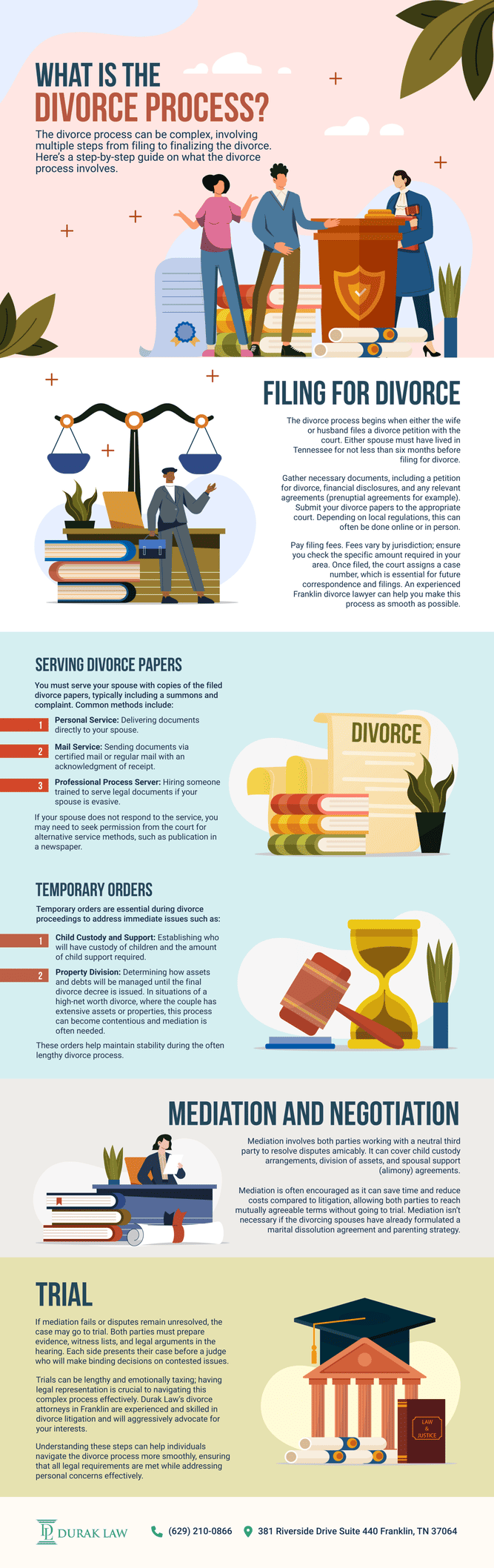
Tennessee allows both no-fault and fault-based divorce proceedings under state law. Irreconcilable differences remain the most common no-fault basis for ending a marriage. This option allows spouses to move forward without proving misconduct caused the relationship breakdown.
Tennessee law also recognizes several fault-based grounds for divorce. These grounds may include adultery, abandonment, habitual drunkenness or drug abuse, and inappropriate marital conduct during the marriage. Some spouses pursue these claims because they believe misconduct affected financial or family responsibilities.
Fault-based allegations often increase disagreements during settlement discussions and divorce negotiations. Disputes involving evidence, financial records, or witness testimony may create additional legal complications. As tensions continue growing, some cases become harder to resolve through mutual agreement alone.
Contested divorce proceedings may eventually require hearings before a Tennessee family court. This process often includes additional filings, discovery procedures, and longer litigation timelines. Because these disputes quickly become complex, early legal preparation often helps individuals understand their responsibilities more clearly.
Meeting Tennessee Residency Rules and Waiting Periods
Tennessee requires residency and venue rules to be satisfied before divorce proceedings officially begin. In most cases, paperwork must be filed in the proper Tennessee county court. After the filing is made, the other spouse must receive formal notice through legal service.
Tennessee law requires waiting periods of:
- at least 60 days when no minor children are involved
- at least 90 days when minor children are involved
These waiting periods represent only the minimum timeline required under Tennessee divorce procedures.
Disputes involving parenting issues, support obligations, or property division often significantly extend the process. As disagreements continue, additional hearings and negotiations may delay the final resolution.
Some couples pursue an uncontested divorce when they are able to reach agreements involving parenting responsibilities, financial obligations, and property division before prolonged litigation becomes necessary. Other disputes involve contested filings that require greater court involvement before resolution becomes possible. Because timelines vary widely, many individuals underestimate how long contested divorce proceedings may continue.
Managing Temporary Orders and Early Divorce Disputes
Managing Temporary Parenting and Financial Orders
Temporary court orders often shape daily responsibilities soon after divorce proceedings officially begin. These orders may address parenting schedules, child support, spousal support, and household financial obligations. Courts may also decide who remains responsible for certain marital property during the pending case.
Many temporary orders remain in effect until the court approves the final divorce terms. Since divorce proceedings may continue for several months, these early decisions often shape parenting routines, financial responsibilities, and household stability long before the case concludes. Once temporary arrangements are established, modifying them may become more difficult as the proceedings continue.
Temporary parenting schedules may determine where children live and how visitation responsibilities are shared. Financial orders may also affect mortgage payments, household bills, insurance coverage, and access to joint accounts. As these obligations continue, many individuals begin feeling pressure to maintain stability while litigation remains unresolved.
Failure to comply with temporary court orders may lead to additional legal disputes during divorce proceedings. Missed support payments, violations of the parenting schedule, or unauthorized property transfers often increase conflict between the parties. These disputes sometimes result in enforcement hearings, financial penalties, or restrictions affecting later court decisions.
Responding to Early Hearings and Filing Deadlines
After divorce paperwork is filed, the other spouse must receive formal notice through service of process procedures. Tennessee law also requires timely responses after divorce petitions are properly served on the opposing party. Missing response deadlines may affect how certain issues are addressed during litigation.
Courts often schedule initial hearings shortly after divorce proceedings officially begin in Tennessee. These hearings may address:
- procedural requirements
- temporary disputes
- financial concerns
- parenting responsibilities
Early court appearances also help establish how the case will proceed.
Many Tennessee divorce cases attempt mediation before trial becomes necessary for final resolution. Mediation frequently addresses disagreements involving parenting schedules, support obligations, and division of marital property. This process sometimes allows both parties to resolve disputes without extended courtroom litigation.
Courts may also address urgent disagreements involving property access, financial responsibilities, or parenting arrangements during early proceedings. Judges sometimes enter temporary restrictions when disputes threaten financial stability or interfere with parenting obligations. Because these decisions occur quickly, procedural mistakes or missed deadlines may create unnecessary complications later in the case.

Resolving Property Division and Marital Debt Issues
Dividing Marital Assets and Debt Under Tennessee Law
Tennessee follows equitable distribution rules when dividing property during divorce proceedings. This approach does not automatically require equal division between both spouses after separation. Instead, courts evaluate several financial factors before determining what distribution appears fair under the circumstances.
Under Tenn. Code Ann. § 36-4-121, Tennessee distinguishes marital property from separate personal property. Marital property generally includes assets or debts acquired during the marriage by either spouse. Separate property may include inheritances, certain gifts, or assets owned before the marriage began.
Property division often involves homes, retirement accounts, investment accounts, vehicles, business interests, and shared financial obligations. Courts may also evaluate mortgages, loans, credit card balances, and other marital debt during proceedings. As financial issues become more complex, disagreements often arise over ownership, valuation, and repayment responsibility.
Property division decisions may continue affecting financial stability long after divorce orders become final. Retirement savings, debt obligations, and ownership interests often influence future financial planning and household stability. Because these decisions carry lasting consequences, careful financial review remains important throughout the divorce process.
Resolving Financial Disputes During Divorce
Financial disputes often become more complicated in high-asset divorce matters involving business interests, retirement accounts, investment portfolios, or substantial marital property. Some disputes involve hidden assets, incomplete disclosures, business valuation concerns, or disagreements regarding debt allocation. These issues frequently create additional delays while both parties review financial records and supporting documentation.
Courts often rely on financial records when evaluating disputed assets and outstanding financial obligations. Important records may include:
- tax returns
- retirement statements
- bank records
- investment documents
- debt information
Accurate documentation helps courts evaluate financial circumstances more clearly during property division proceedings.
Financial disputes often become more complicated when records are incomplete, valuations remain contested, or one party believes important information has not been fully disclosed. Delays involving bank records, business documents, or account statements may slow negotiations and extend the litigation process. In some contested divorces, unresolved financial issues eventually require additional court review before meaningful settlement discussions can continue.
Unresolved financial disagreements may continue creating legal problems after final divorce orders are officially entered. Disputes involving unpaid obligations, undisclosed assets, or enforcement concerns sometimes require additional court proceedings later. Because of these risks, financial accuracy and complete disclosure remain important throughout the divorce process.
Creating Parenting Plans and Resolving Child Support Issues
Creating Parenting Plans and Custody Schedules
Tennessee courts generally require parenting plans in divorce cases with children, where parenting schedules and decision-making responsibilities remain ongoing concerns after separation. These plans help establish parenting responsibilities and outline how important decisions will be handled after separation. Courts often expect parenting agreements to address practical issues affecting the child’s daily routine and long-term stability.
Parenting plans commonly include residential schedules, holiday arrangements, and transportation responsibilities between both households. Courts may also review decision-making authority involving healthcare, education, and other important parenting matters. As parenting schedules become more detailed, disagreements sometimes arise regarding communication, transportation responsibilities, and scheduling expectations.
Tennessee courts evaluate custody matters using the best interests of the child standard during divorce proceedings. Judges may consider parenting involvement, household stability, communication patterns, and each parent’s ability to meet the child’s needs. Because every family structure differs, parenting arrangements often depend on the specific circumstances surrounding the case.
Detailed parenting agreements may help reduce future disagreements and enforcement disputes after divorce proceedings conclude. Clear schedules and defined responsibilities often create greater consistency for both parents and children over time. When disagreements persist after final orders are entered, additional court involvement may be necessary to address unresolved parenting concerns.

Addressing Child Support and Shared Financial Responsibilities
Child support obligations in Tennessee generally follow statewide guidelines used during divorce proceedings involving children. Courts often review parental income, parenting time, and child-related expenses when calculating support responsibilities. These evaluations help determine how financial obligations should be divided between both parents after separation.
Support calculations may also include:
- healthcare expenses
- childcare costs
- insurance obligations
- certain educational expenses involving the child
These financial responsibilities sometimes create disagreements when parents dispute income levels or necessary monthly expenses. As costs increase, support obligations may significantly affect long-term financial planning for both households.
Parenting arrangements and child support orders may sometimes be modified when Tennessee legal standards are satisfied. Significant financial changes, parenting schedule adjustments, or other material circumstances may warrant a review of existing court orders. Because modification requests involve procedural requirements, courts generally require supporting documentation before approving changes.
Handling Divorce Matters That Involve Complex Legal Issues
Handling Contested and High-Conflict Divorce Matters
Some divorce proceedings proceed through mutual agreement and limited court involvement by both parties. Other cases involve contested legal disputes requiring hearings, negotiations, and additional procedural steps before resolution. As disagreements increase, the legal process often becomes more demanding for everyone involved.
Divorce matters involving children frequently include disputes regarding parenting schedules and long-term household responsibilities. Financial disagreements may also involve high-value assets, retirement accounts, business ownership interests, or substantial marital debt. These issues often require closer financial review before settlement discussions can continue productively.
Business ownership disputes sometimes create additional complications during property division and financial negotiations. Questions involving valuation, income records, and ownership interests may affect long-term financial obligations after separation. Because these issues involve significant financial concerns, negotiations often continue longer than expected.
Some divorce matters require extensive negotiation before final agreements can be reached successfully between both spouses. Other disputes eventually require greater court involvement when parenting or financial agreements remain unresolved. How a divorce proceeds often depends on the specific financial disputes, parenting disagreements, and level of conflict involved in the case.
Resolving Disputes That Increase Divorce Complexity
Financial disputes often increase the complexity of divorce proceedings and delay settlement discussions between both parties. Some disagreements involve:
- incomplete financial disclosures
- hidden assets
- conflicting valuation of marital property
Parenting disputes may also create additional legal concerns during negotiations and court proceedings.
Long-term financial obligations sometimes become disputed when spouses disagree regarding future support responsibilities after divorce. These disagreements may involve income calculations, property interests, or allocation of ongoing household financial obligations. As financial concerns evolve, negotiations often become more difficult to resolve efficiently.
Some divorce proceedings require mediation or additional litigation before final agreements can be reached successfully. Courts may become more involved when parenting disputes or financial disagreements prevent productive settlement discussions. This process often extends the timeline beyond what many individuals initially expected during early proceedings.
Legal strategy often depends on the disputed issues, financial concerns, and parenting responsibilities affecting each divorce matter. Unresolved financial or parenting disputes may continue creating legal problems after final court orders are entered. Because of these risks, careful preparation remains important throughout every stage of the divorce process.
Guiding Clients Through Divorce Negotiations and Court Proceedings
Preparing Legal Filings and Managing Divorce Negotiations
Divorce proceedings often require extensive legal filings and detailed financial documentation throughout the case. These materials may include:
- financial disclosures
- parenting agreements
- settlement proposals
- other required court documents
Careful preparation often helps reduce procedural mistakes that may delay the legal process.
Settlement discussions and mediation proceedings frequently occur before contested divorce matters reach trial. Some disputes are resolved through negotiation, while others require hearings or additional litigation before an agreement becomes possible. Ongoing disputes often make procedural requirements, negotiations, and legal deadlines more difficult to manage without guidance.
Courts handling divorce matters involving Franklin residents may require strict compliance with filing deadlines and procedural rules. Williamson County Chancery Court is one court that may handle divorce-related proceedings involving local families. Missing documentation or incomplete filings sometimes create delays that affect negotiations and court scheduling later in the case.
Reviewing Divorce Agreements and Long-Term Obligations
Settlement agreements often contain long-term financial and parenting obligations that continue after divorce proceedings officially conclude. Because these agreements become legally enforceable, careful review remains important before signing final documents. Small wording differences can lead to larger legal disputes after court orders have already been entered.
Unclear financial terms or parenting provisions may lead to disagreements over future responsibilities and enforcement concerns. Disputes sometimes develop regarding:
- parenting schedules
- support obligations
- interpretation of property division terms
These disagreements often require additional legal proceedings when settlement language lacks sufficient detail.
Poorly structured agreements may also create future enforcement disputes involving unpaid obligations or parenting schedule violations. Missing provisions sometimes leave important financial or parenting responsibilities unresolved after divorce orders become effective. As these problems continue, additional court involvement may become necessary to clarify existing obligations.
Legal review may help identify enforceability concerns, incomplete terms, or unresolved issues before agreements become final. Representation cannot guarantee a specific outcome during negotiations or court proceedings involving divorce matters. However, legal guidance may help individuals make more informed decisions throughout the legal process.

Frequently Asked Questions About Divorce in Tennessee
How Long Does Divorce Usually Take in Tennessee?
Tennessee requires a minimum 60-day waiting period for divorces without minor children. Cases involving minor children require at least a 90-day waiting period before a divorce can be finalized. Contested disputes involving custody, finances, or property division may extend the process well beyond those minimum timelines.
Can You Get Divorced in Tennessee Without Proving Fault?
Yes. Tennessee allows no-fault divorce based on irreconcilable differences between spouses. The state also recognizes fault-based grounds such as adultery, abandonment, substance abuse, and inappropriate marital conduct.
How Do Tennessee Courts Divide Marital Property?
Tennessee follows equitable distribution rules, meaning courts focus on a fair division rather than automatically splitting everything equally. Judges may review assets, debts, retirement accounts, homes, businesses, and financial contributions made during the marriage before issuing final orders.
Do Both Spouses Need To Agree Before Getting Divorced in Tennessee?
No. Some divorces proceed through uncontested agreements when both spouses resolve major issues together. However, Tennessee courts can still grant a divorce even when disagreements remain over parenting, finances, or property matters.
Can Courts Modify Child Custody or Support Orders After Divorce?
Yes. Tennessee courts may modify custody or child support orders when significant changes affect the child or either parent’s circumstances. Courts usually require evidence showing why the requested modification is necessary before approving changes.
Talk to a Franklin Divorce Lawyer
Ending a marriage often requires more than completing court filings or dividing property through formal agreements. Decisions made during divorce proceedings may affect where children live, whether a home is sold, how retirement accounts are divided, and what financial responsibilities continue after separation. Even when spouses agree on certain issues, unresolved disagreements over parenting, support, or marital assets can continue to shape the process in significant ways.
Durak Divorce and Family Law assists individuals throughout Franklin who are navigating divorce matters, including parenting arrangements, financial transitions, property disputes, and shifting household responsibilities. Our firm works with clients to address practical concerns throughout the divorce process while helping them better understand how negotiations, court proceedings, and long-term obligations may affect their future. Contact us today or call (629) 210-0866 to discuss your divorce matter and speak with a Franklin divorce lawyer about the issues affecting your case.